 Reqlyn
Get an API working once. Then let your whole team use it.
Reqlyn is an API workbench for your computer and a server you run yourself. Figure out an unfamiliar API, save what you learned as an operation with real inputs and outputs, publish it for your team, and hear about it when the API changes under you.
GET  /api/v1/devices?site=north      →  Find device   (site → device, address)
POST /ipam/addresses/next          →  Reserve address (reads first, then writes)
                                          →  published as provision-edge v3
                                             run from the desktop, the command line, CI, an agent or MCP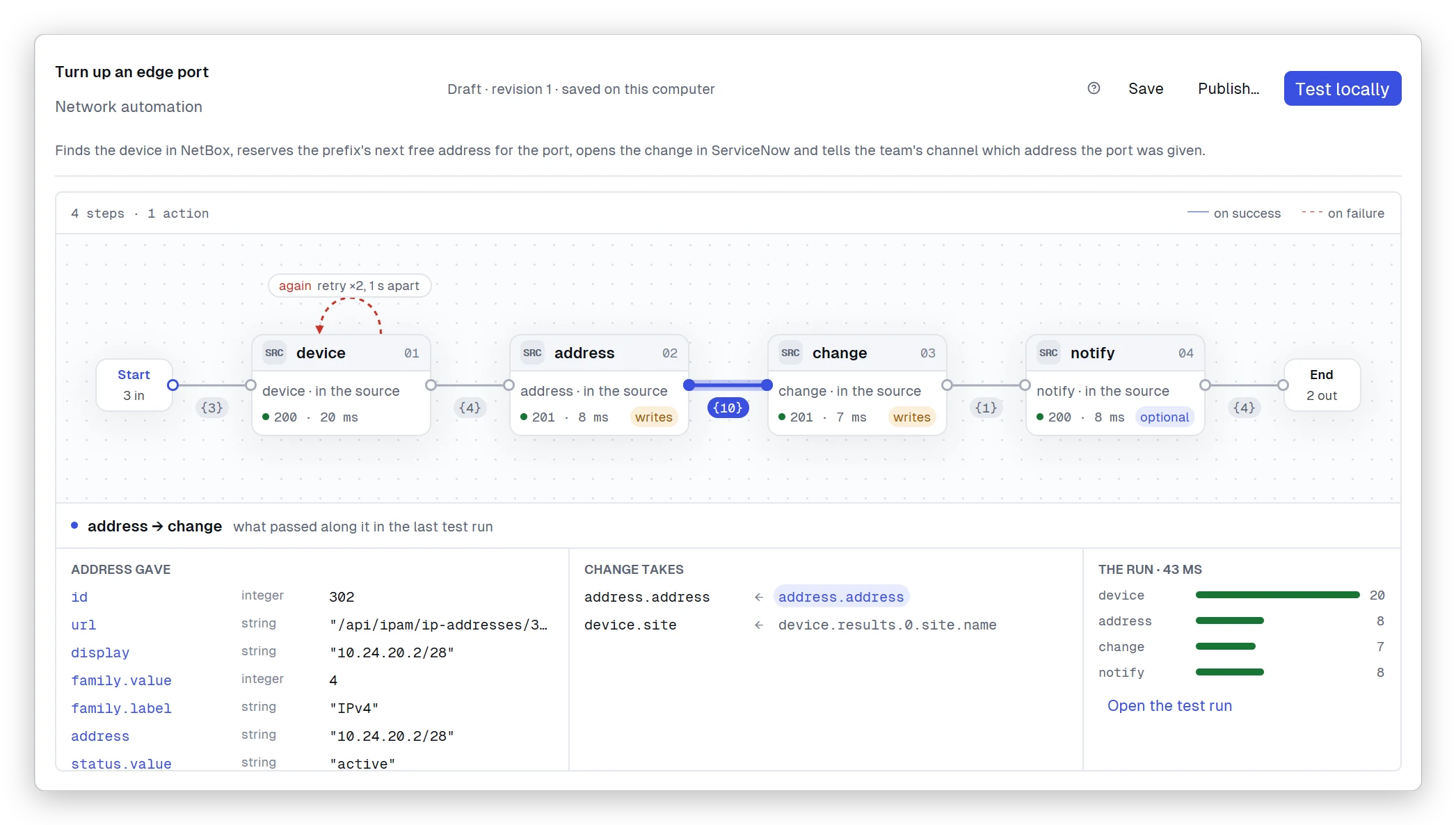
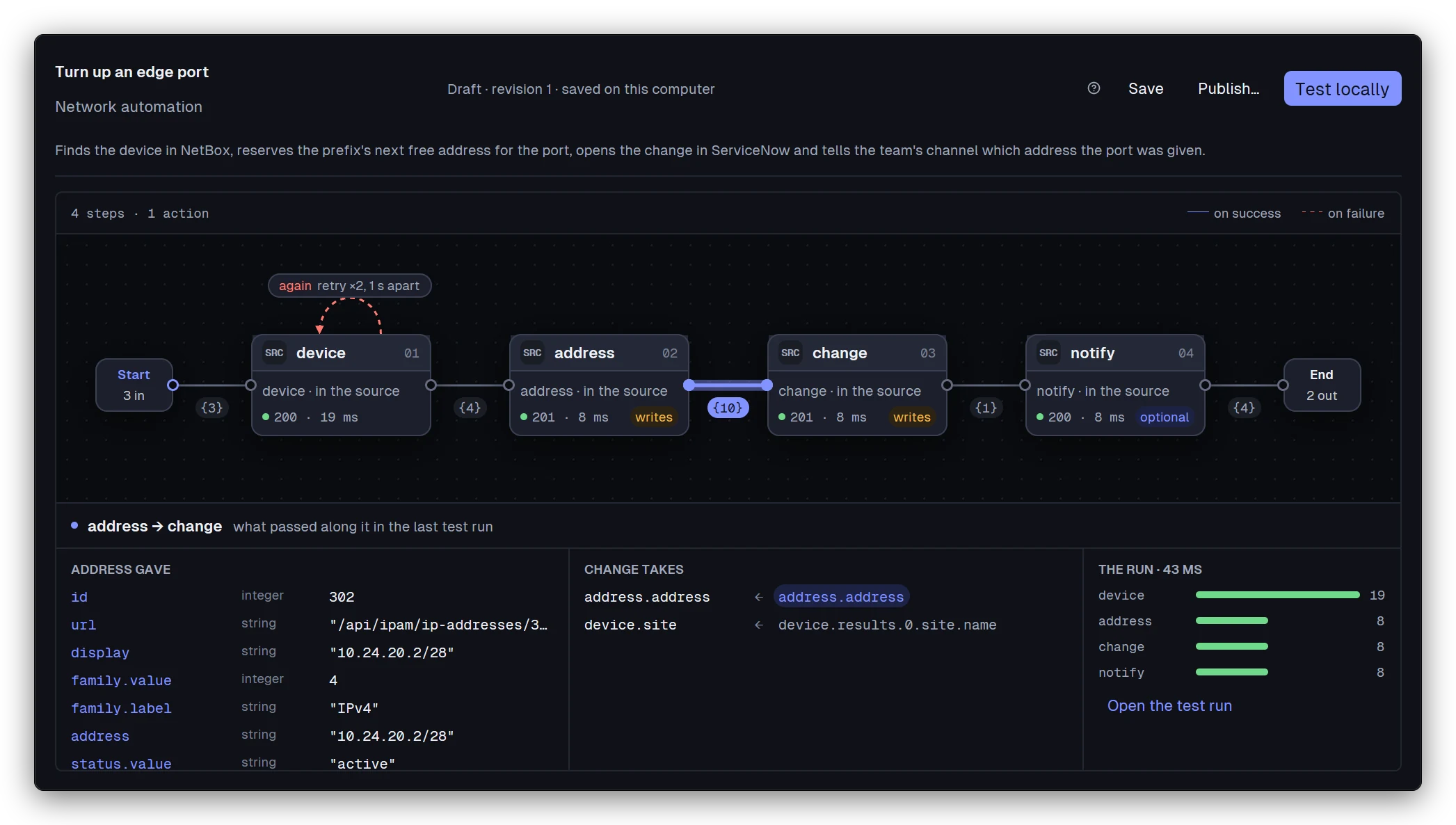
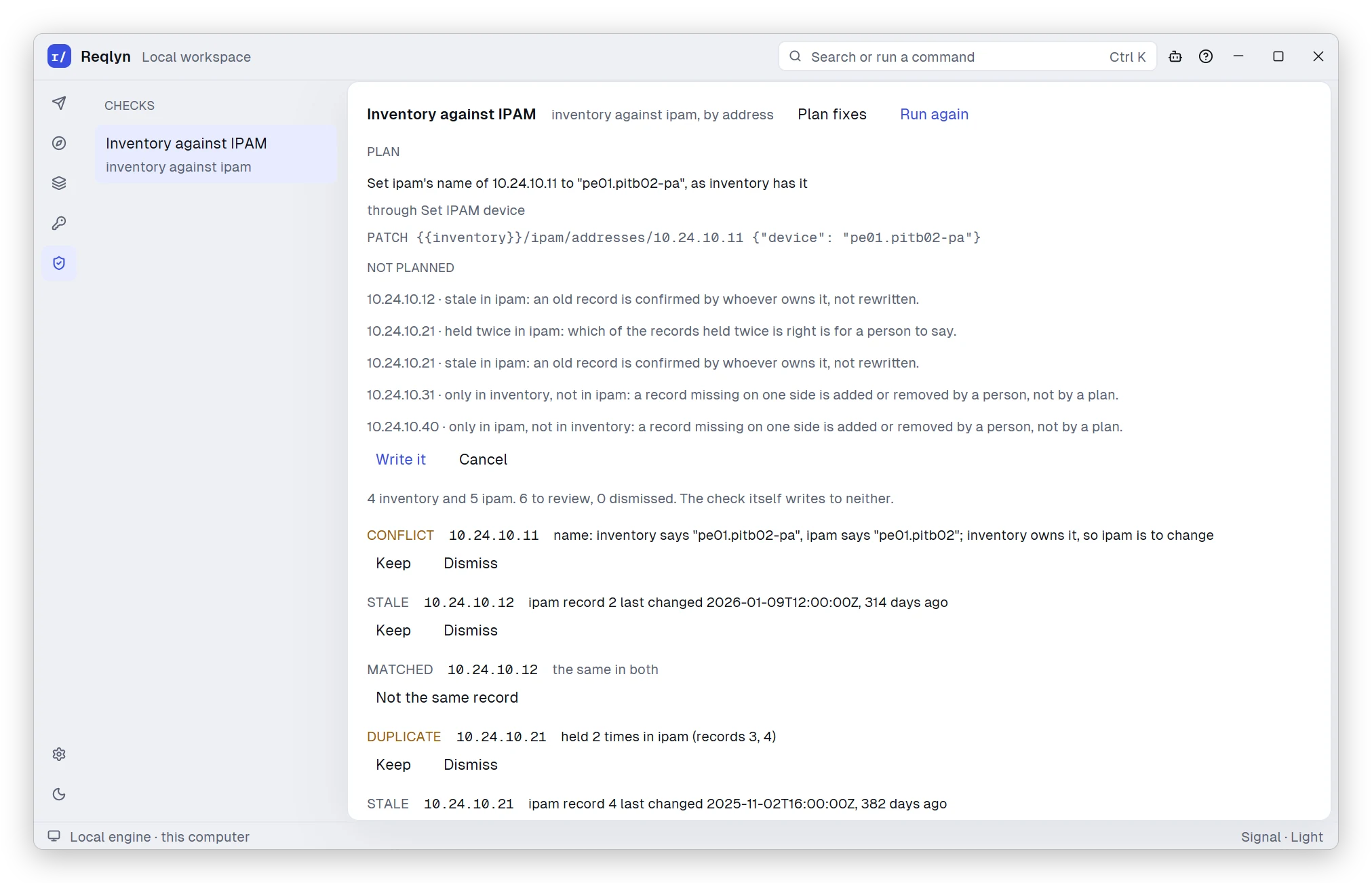
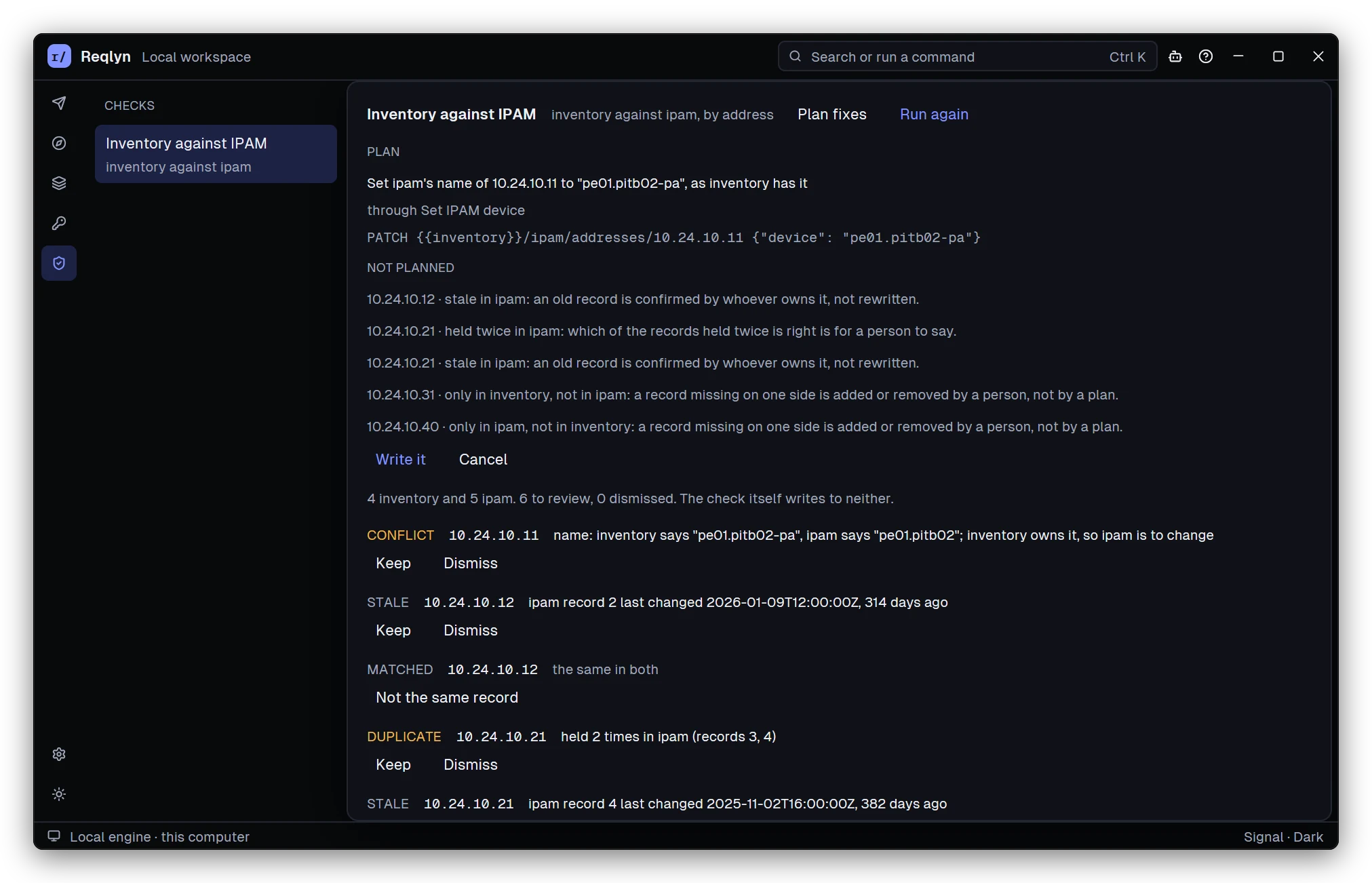
address to change.From one request to something your team can run
Your requests and operations are the same on your computer, in Git and on your server. Nothing gets rebuilt along the way.
Get it working
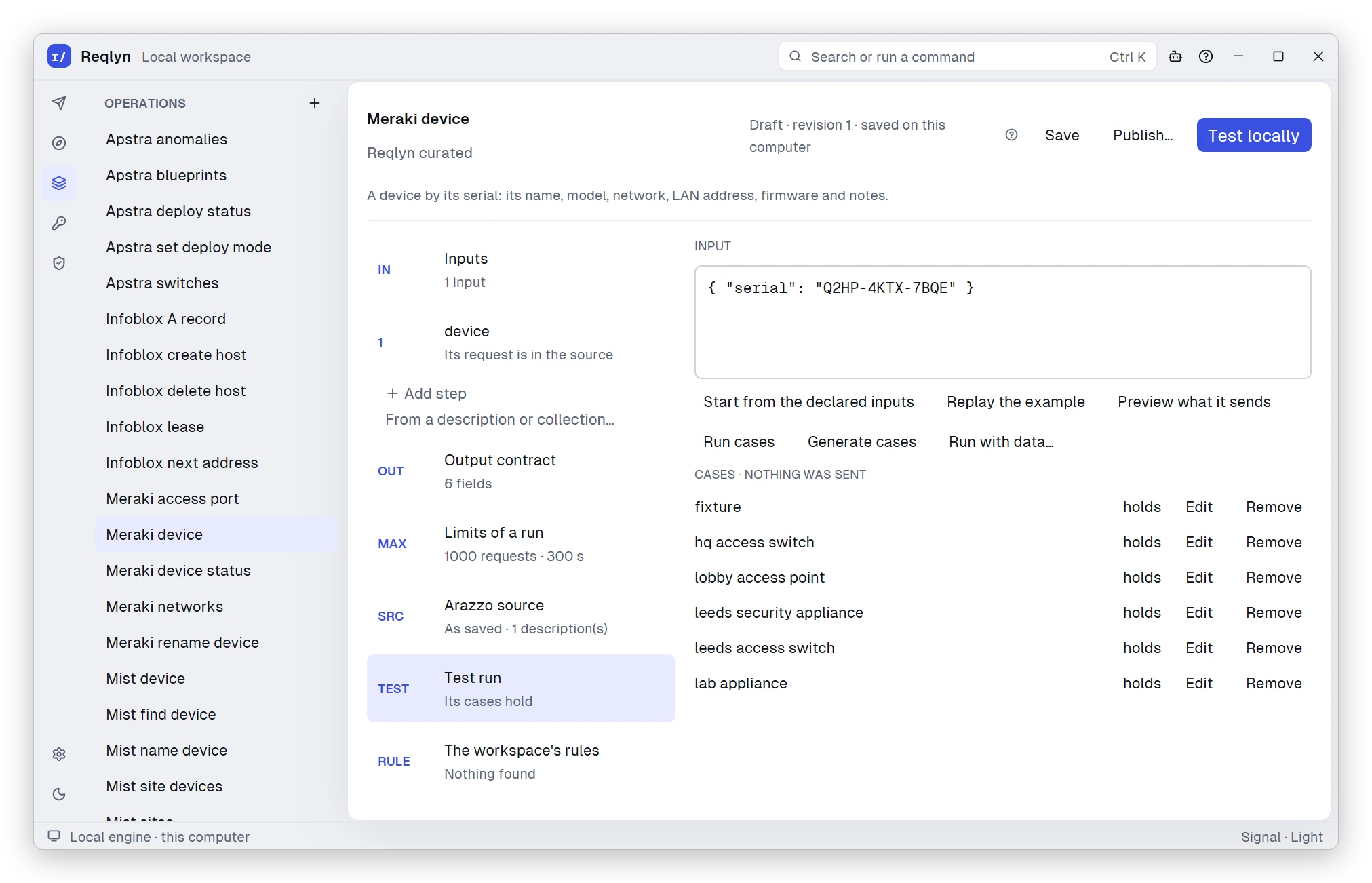
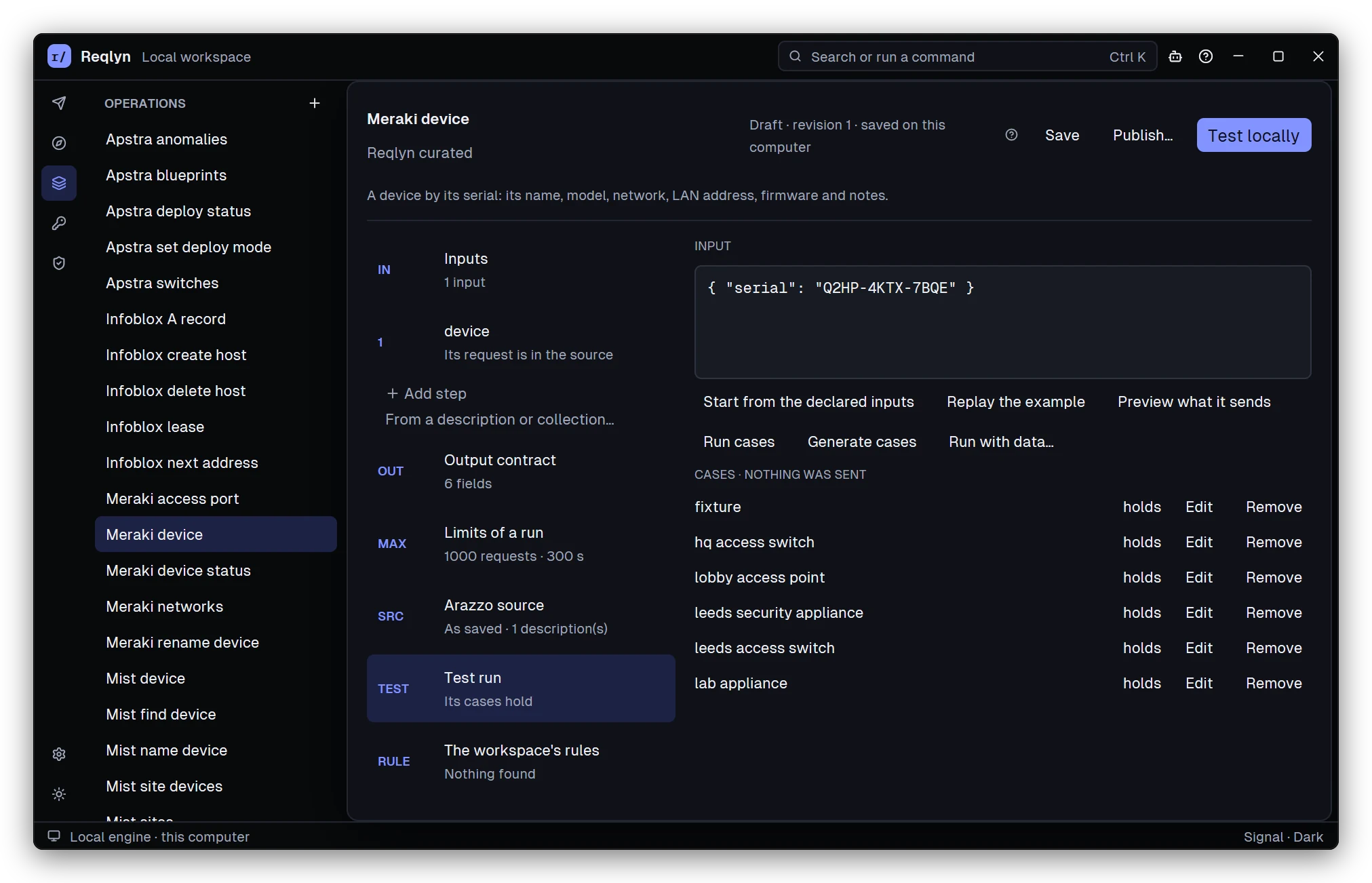
Bring in what you already have: OpenAPI, Postman, Insomnia, Bruno, HAR or curl. Or record a session in your browser. Your credentials stay in your operating system’s secret store.
Keep what you learned
Turn requests into an operation on a canvas or in Arazzo, with typed inputs and outputs, retries, paging and waits. A step that writes can read first, so a preview shows you what it would change.
Publish and run
A published version never changes, and a second person can approve it before it goes live. Run it from the desktop, the command line, CI, a private agent inside your network, or as an MCP tool.
Know when it changes
Recorded cases replay before a version goes live. Drift checks against the API’s description, and an inventory of every API you call, show you what changed and who it affects.
Made for network teams and the systems around them
Sixty-eight signed, curated packs get you started, each one tested against its own fixture: Meraki, Mist, Juniper Apstra and Support Insights, Arista CloudVision, Cisco Catalyst Center, NSO and ACI, Nokia NSP, F5, PAN-OS, FortiGate, NetBox, Infoblox, BlueCat, IP Fabric, Forward, ThousandEyes, Zabbix, ServiceNow, PagerDuty, Vault, CyberArk, and more.
Yours to run
There’s no Reqlyn cloud and no telemetry. The desktop works fine on its own, and the server runs wherever you put it, reaching only the destinations you allow. A credential only goes to the origins you approve, and sync is encrypted end to end with your workspace key. See what leaves your computer.